Showing posts with label recipes. Show all posts

Tuesday, June 27, 2017

Remembering Miguel Ravago (1945–2017) of Fonda San Miguel

We were saddened to learn of the passing of Miguel Ravago this weekend—the visionary chef behind Austin’s Fonda San Miguel restaurant.
Miguel Ravago of Fonda San Miguel
            
Ravago earned rave reviews for his subtle and complex dishes that defined Fonda San Miguel’s menu and brought interior Mexican cuisine to central Texas. From Tostadas de Cochinita Pibil to start, to Carne Asada a la Tampiqueña, and Cajeta Crepes to finish, every meal at Fonda San Miguel was a reflection of Ravago’s passion and his childhood spent cooking at his grandmother’s side.
            
“I was also curious about cooking,” Ravago wrote for the restaurant’s official cookbook, Fonda San Miguel: Forty Years of Food andArt, “so my grandmother started showing me things like how to fill tamales. By the time I was six or seven, I was helping in the kitchen quite a bit. . . . So even when I was pretty young, I think I knew I wanted to be a chef.”
            
When Fonda San Miguel first opened in 1971, almost 50 years ago, a restaurant featuring authentic Mexican cuisine was a daring idea in a city where Tex-Mex food reigned supreme. Ravago and co-owner Tom Gilliland won over customers who expected a “No. 1 Enchilada Dinner” to build a loyal clientele of adventuresome eaters who came as much for the romantic hacienda-style décor as the food.
Ravago and co-owner Tom Gilliland
            
“After thirty years, cooking is still great fun for me,” wrote Ravago. “I especially enjoy the Hacienda Sunday Buffet, which always features four entrees from four different states in Mexico. This gives me a chance to help people learn about the food. If customers tell me they’re planning a trip to a certain region of Mexico, I show them what dishes to taste so they’ll know what kind of food to expect. Sometimes they come back and say the food wasn’t as good as Fonda San Miguel’s, and that’s always nice to hear. . . . I’ve always been curious about food, and I love to see people learn more about Mexican cuisine.”

            
In the spirit of Ravago’s desire to share Mexico’s diverse regional dishes, click through for a few recipes from Fonda San Miguel, including a tequila toast to a trailblazer for Mexican cuisine in America.


Monday, May 8, 2017

Books Every Mother Can Love

Mothers should be pampered for Mother's Day. That means that when you give your mother a cookbook, you should also treat her to a dish made from that cookbook. We've made how-to videos for two recipes from Terry Thompson-Anderson's newest cookbook, Breakfast in Texas: Recipes for Elegant Brunches, Down-Home Classics, and Local Favorites. We've got one recipe for a Bloody Shiner using Texas Hill Country Distillers moonshine, and a classic recipe for Huevos con Migas that can be made ahead of time and served to mom on Sunday morning.

We have more recommendations for books that make great Mother's Day gifts, including books for birders, art lovers, swimming hole aficionados, and more.


* Top Pick *


Breakfast in Texas
Recipes for Elegant Brunches, Down-Home Classics, and Local Favorites


By Terry Thompson-Anderson, with photos by Sandy Wilson

The author of the James Beard Cookbook Award finalist Texas on the Table presents nearly one hundred recipes for breakfast and brunch, including favorites from some of Texas’s most popular restaurants, along with menus for entertaining and delightful culinary notes.

Hardcover, $35.00

311 pages | 8 x 10 | 123 color photos | ISBN: 978-1-4773-1044-1


How to Make Terry Thompson-Anderson's Huevos con Migas


Watch the video

More Mother's Day Books


Texas on the Table


By Terry Thompson-Anderson, Photos by Sandy Wilson
One of Texas’s leading cookbook authors presents 150 recipes that showcase the state’s bounty of locally grown meats and produce, artisanal cheeses, and award-winning wines, along with fascinating stories of the people who are enriching the flavors of Texas.
Hardcover, $45.00

ISBN: 978-0-292-74409-7


This Land
This Land
An American Portrait

Photographs by Jack Spencer
Foreword by Jon Meacham

Created across thirteen years, forty-eight states, and eighty thousand miles, this startlingly fresh photographic portrait of the American landscape shares artistic affinities with the works of such American masters as Edward Hopper, Grant Wood, Mark Rothko, and Albert Bierstadt.
Hardcover, $45.00

ISBN: 978-1-4773-1189-9


Nina Katchadourian
Nina Katchadourian
Curiouser


Edited by Veronica Roberts Essays by Jeffrey Kastner and Veronica Roberts; interview by Stuart Horodner

This catalogue of an exhibition at the Blanton Museum of Art at the University of Texas at Austin presents a mid-career survey of the work of Brooklyn-based artist Nina Katchadourian.
Hardcover, $34.95

ISBN: 978-1-4773-1151-6


The Collections: The University of Texas at Austin
Edited by Andrée Bober
Spotlighting more than eighty collections in very diverse fields, this extensively illustrated volume showcases the unparalleled quality and range of the holdings of the University of Texas at Austin.

“Like all wonderfully rich cabinets of curiosities, The Collections rewards slow and repeated looking.”

—Glasstire
Hardcover, $125.00

ISBN: 978-1-4773-0785-4


A Love Letter to Texas Women
By Sarah Bird

Acclaimed author Sarah Bird celebrates the uniqueness of Texas women in this beautifully designed gift book.

“Sarah Bird is a true eccentric, but one with a straightforward gift for explaining the human heart. . . . A Lone Star girl-legend.”
—Boston Globe
Hardcover,  $16.95

ISBN: 978-1-4773-0949-0


The Swimming Holes of Texas
By Julie Wernersbach and Carolyn Tracy; photography by Carolyn Tracy
Full of practical information to help plan your visits and enticing color photos of one hundred freshwater swimming holes, here is the first-ever guide to the best places to swim in Texas.
Paperback, $21.95

ISBN: 978-1-4773-1237-7


The Quality of Life Report
The Quality of Life Report: A Novel
By Meghan Daum, Foreword by Curtis Sittenfeld
A New York Times notable book, The Quality of Life Report is the critically acclaimed first novel by Meghan Daum, New York Times best-selling author and winner of the PEN Center USA Award for creative nonfiction.
Paperback, $15.95

ISBN: 978-1-4773-1300-8


Comfort and Glory
Comfort and Glory: Two Centuries of American Quilts from the Briscoe Center
By Katherine Jean Adams, Foreword by Karoline Patterson Bresenhan and Nancy O’Bryant Puentes
Showcasing 115 remarkable quilts that span more than two hundred years of American quiltmaking, this volume introduces an outstanding collection of American quilts and quilt history documentation.
Hardcover, $ 75.00

ISBN: 978-1-4773-0918-6


One More Warbler

A Life with Birds

By Victor Emanuel, with S. Kirk Walsh
With stories of sighting rare birds ranging from an Eskimo Curlew to the cranes of Asia, one of America’s foremost birders recalls a lifetime of birding adventures, including friendships with luminaries Roger Tory Peterson, Peter Matthiessen, and George Plimpton.
Hardcover, $29.95

ISBN: 978-1-4773-1238-4


The Texanist
The Texanist
Fine Advice on Living in Texas
By David Courtney and Jack Unruh
The first collection of acclaimed illustrator Jack Unruh’s work, this book gathers the best of the illustrations he created for The Texanist, Texas Monthly’s back-page column, along with the serious and not-so-serious questions that inspired them.
Hardcover, $24.95

ISBN: 978-1-4773-1297-1


Chrissie Hynde
Chrissie Hynde: A Musical Biography
By Adam Sobsey
With new insights into her life and music and fascinating details about the making of all of her albums, this is the first book about Rock and Roll Hall of Fame legend Chrissie Hynde, the leader of The Pretenders.
Hardcover, $24.95

ISBN: 978-1-4773-1039-7


Yucatán
Recipes from a Culinary Expedition
By David Sterling
Winner of the 2015 James Beard Foundation Cookbook of the Year Award
With over 275 authentic, easy-to-follow recipes, lively stories of their origins, and luscious illustrations, here is the definitive work on the foods of Yucatán, one of the world’s great regional cuisines.
Hardcover, $60.00

ISBN: 978-0-292-73581-1


Tuesday, November 22, 2016

Recipes from Fonda San Miguel

Austin locals know the restaurant Fonda San Miguel as a great place to gather with families for a special occasion. Its Sunday brunch is legendary. As one of the Southwest's top restaurants, not only is the food top quality, its ambiance and art transport patrons to
More info
a romantic hacienda in Mexico.


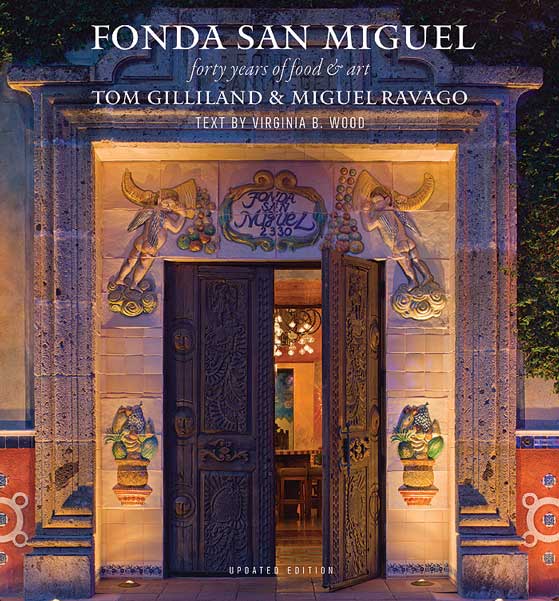
When the Fonda San Miguel cookbook was first published in 2005, it was an instant hit and won awards from the International Association of Culinary Professionals and Independent Publishers Association. Fonda San Miguel: Forty Years of Food and Art is now updated and reissued with a lavish compilation of recipes and art from one of America’s premier restaurants serving interior Mexican cuisine.

To celebrate, we've pulled a few recipes from the book for Thanksgiving week. Feast well!

We've partnered with BookPeople and
 Edible Austin for a talk with restauranteur and author Tom Gilliland on Thursday, December 8th at 7pm. He'll speak about the book and there will be some bites to taste along with his talk. Don't miss it!


From Fonda San Miguel: Forty Years of Food and Art


Spicy Red Snapper Bloody Mary—or María


This is your spicy Bloody Mary but with a fun twist. You can make it with your choice of gin, vodka, tequila, or mezcal.

  • 5 ice cubes
  • 1 6-ounce can tomato juice (the best you can get)
  • 2 ounces gin, vodka, tequila, or mezcal
  • 2 tablespoons freshly squeezed lemon juice
  • 2 tablespoons bottled hot pepper sauce (Salsa Valentina)
  • 2 tablespoons Worcestershire sauce
  • 1/2 teaspoon brine from a jar of olives
  • 1 pinch hot chili powder
  • 1 pinch garlic powder
  • 1 pinch ground cumin
  • 1/4 teaspoon celery salt
  • 1/4 teaspoon freshly ground pepper
  • 1/4 teaspoon prepared or freshly grated horseradish
Garnish
  • 1 celery stalk with leaves (from the heart of the celery)
  • 1 small dill pickle
  • 2 stuffed green olives
  • 1 freshly cut lemon wedge

Place ice cubes in a cocktail shaker. Pour in all liquid ingredients and season with all the rest. Cover and shake until the outside of the shaker is frosty.

Pour all contents, including ice, into a 12-ounce highball glass. Before serving, garnish with celery, pickle, olive, and lemon wedge. Serves 1.


Higaditos con Higos Y Jalapeños
Chicken Livers with Figs and Jalepeños


This may sound like a strange combination, but the sweet/sour/spicy joining of figs, onions, jalapeño, and vinegar is a perfect foil for the livers and their savory richness. These are great served with cocktails.
  • 5 tablespoons unsalted butter 
  • 2 red onions, peeled and thinly sliced 
  • 1 fresh jalapeño pepper, chopped 
  • 1 2/3 cups chicken livers, trimmed of sinew 
  • 3 tablespoons granulated sugar 
  • 4 ripe figs, stems removed and halved 
  • 5 tablespoons red wine vinegar 
  • 4 slices sourdough bread, toasted 
  • Extra virgin olive oil 
  • 1/4 cup fl at leaf parsley, roughly chopped 
  • Zest of 1/2 lemon

Melt half the butter in a large frying pan. Add the onions, jalapeño, and a pinch of salt. Cook over gentle heat for 20 minutes, until the onion is soft and starting to brown. Remove to a plate and set aside.

Thoroughly pat dry the chicken livers on paper towels. Season well with salt and pepper. Add the remaining butter to the frying pan and, once it foams, add the livers. Fry over medium heat for about 2 minutes on each side or until cooked through. Cook in batches if needed. Set aside with the onions.

Turn the heat to medium-low. Sprinkle the sugar over the pan and add the figs, cut side down. Cook for about 1 minute, until the cut side starts to bubble and brown; turn over. Add the vinegar and bubble for a few seconds, until syrupy. Return the onions and livers to the pan. Correct the seasonings and stir together.

Spoon the fig and liver mixture over the toast. Splash with olive oil and sprinkle with parsley and lemon zest before serving. Serves 4.

Wednesday, May 21, 2014

Barbecue Like a Texas Legend

Here in Austin, we’re fortunate enough to enjoy “grill out” weather from Easter through Thanksgiving, but this weekend is special. It's Memorial Day and we want you to step up your cookout game with some tried-and-true recipes from some of the biggest barbecue players in Central Texas: Scott Roberts of the Salt Lick, Vencil Mares of the Taylor Café, and from the notebooks of Robb Walsh (we posted Robb's recipe for barbecued hog forequarter with East Carolina barbecue sauce and a Tennessee Hog Rub here). 

So as you prepare to honor the men and women in the armed forces, 
Barbecue Crossroads by Robb Walsh
Photographs by O. Rufus Lovett
take this opportunity to preserve and enjoy diverse American foodways and share them with your friends and family. For more recipes, check out Barbecue Crossroads: Notes and Recipes from a Southern Odyssey and The Salt Lick Cookbook: A Story of Land, Family, and Love. Happy Memorial Day!

Beer Joint Sausage

Vencil Mares of the Taylor Café learned how to make sausage at Southside Market in Elgin. This is a Bohemian Czech sausage recipe from Central Texas. 

If you cook sausage too quickly, you render the fat out of the “batter” of meat and fat inside the casing. This causes the sausage to squirt out all its fat. For best results, set the batter by cooking the sausage very slowly at first. Once the batter is set, you can cook the sausage over high heat.
  • 6 pounds beef rump roast or beef trimmings
  • 4 pounds fatty Boston butt pork roast
  • ¼ cup salt
  • 5 cloves garlic, minced
  • 3 tablespoons coarsely ground black pepper
  • 1 teaspoon cayenne
  • Medium hog casings (available at butcher shops) 
Vencil Mares’s bohunk sausage
with beans served at the bar at Taylor Café
Photo by O. Rufus Lovett from Barbecue Crossroads
 
Coarsely grind the beef rump and pork butt together through the ¼-inch plate of a meat grinder. In a large bowl, mix the ground meat with the salt, garlic, pepper, and cayenne. Knead the mixture with your hands until everything is well blended. Don’t rush the mixing—it takes a long time.

In a small skillet, heat a little oil. Form a meatball-size piece of the mixture into a small patty and fry it. Taste for seasonings, and adjust to your taste.

Soak the hog casings in lukewarm water. Stuff the meat mixture into the hog casings with a sausage stuffer or a pastry bag, and tie into 4- to 6-inch links. The sausage will keep for 3–4 days refrigerated, and up to 2 months frozen.

When you’re ready to cook the sausages, place them in a pan of warm water on the stove and slowly bring the heat up to 140°F to set the “batter.” Set up your smoker for indirect heat with a water pan. Sear the links over hot coals for 3 minutes on each side, or until nicely brown. Move them to indirect heat over a drip pan and smoke for 30 minutes, or until cooked through. Makes 10 pounds.

Variation: Vencil’s Turkey Sausage

Grind 8 pounds of boneless turkey and 2 pounds of fatty pork, and proceed with the recipe for Beer Joint Sausage.


Hush Puppies

In Texas, hush puppies are usually the size and shape of golf balls. In North Carolina, hush puppies are closer to the size and shape of your little finger. You shape them by rolling them between your palms. Or you can just drop the batter from a spoon into the hot oil and make them free-form shapes.

  • Peanut oil for deep-frying
  • 2 ½ cups yellow corn meal
  • 1 teaspoon soda
  • 1 teaspoon salt
  • 2 tablespoons sugar
  • 2 tablespoons flour
  • 1 tablespoon baking powder
  • 1 egg, beaten
  • 2 cups buttermilk
  • 3 tablespoons chopped onion 

Mix the dry ingredients in a bowl. Beat the milk and egg together and combine with the dry ingredients. Add the chopped onion. The batter should be stiff enough to hold its shape. If the batter is too soft, add more cornmeal until it is firm.
Gather a heaping tablespoon of batter and roll into a ball or a finger shape as desired and drop into 350°F oil and fry 3–4 minutes or until golden brown. Maintain the temperature and fry in batches of 4 or 5. Makes about 20 hush puppies.

Salt Lick Coleslaw
Interior spread from the Salt Lick Cookbook

The Salt Lick coleslaw is a shredded cabbage salad mixed with vinegar and oil dressing. Dousing the cabbage with mayonnaise wasn’t an option for settlers when they were traveling west in wagon trains. They had to use ingredients that wouldn’t spoil. We wanted to stay as true as possible to how my family originally made coleslaw.


Friday, January 17, 2014

Journey through Diana Kennedy's Mexico

Diana Kennedy's My Mexico contains over 300 recipes. First published in 1998, the book is, by Diana's own admission, 'highly personal.' She has a story for almost every recipe she has collected over the years; some are fascinating, some are funny, some are chilling, and all of them are delivered in her inimitable voice.

Kennedy's stories drive the book's organization, which is divided by regions (e.g., the Gulf Coast) rather than any particular kind of recipe. With Google's new Maps features, we've plugged in some of the towns in which Diana dined with both friends and strangers to draw inspiration for the recipes in My Mexico. You can click on the location pins in the maps and glimpse the variety of recipes found in the book. After the excerpt below, you'll find a recipe for a delicious snack from Michoacán.

Warning: Navigating these Google maps may lead to increased appetite for the likes of torrejas de frijol (bean fritters in chile sauce), hongos guisados con yerbabuena (mushrooms cooked with mint), or mole de iguana negra (yes, it's what you think it is).

Access the Google map below here: 
mapsengine.google.com >>

https://mapsengine.google.com/map/edit?mid=z1D5e3guf6qM.k7cH9Brr3ST4

Access the Google map below here: mapsengine.google.com >>

https://mapsengine.google.com/map/edit?mid=z1D5e3guf6qM.kAEPBcND1g80
From the book:
San Pancho—How I Got There

It is the beginning of May, and the hottest month of all, as I sit down to write this book in my ecological house in San Francisco Coatepec de Morelos, known locally as San Pancho. The sky is hazy with heat and the dust stirred up by the sudden gusts of high winds, with occasional palls of smoke from a forest fi re in the mountains to the east. Oft en these fires are purposely started by clandestine agents scouting timber for the greedy timber merchants who can then go in to clear and to cut or by farmers’ unattended burning of last year’s stubble to prepare the land for planting. The hills to the south and west are brown and bare in sharp contrast to the brilliant green valley, where the dam provides irrigation to the low fields around it. This is the month when tempers flare and explode, when young blades and old machos drink up a storm and give primeval screams or shoot off their rounds of ammunition as they saunter through the lanes of San Pancho. There is a heaviness in the air and a sense of foreboding. Will the rains come on time? The signs are anxiously awaited. Heriberto, my nearest neighbor, says he has seen the first aludas, winged ants, that are a sure sign, but the mayates, June bugs, hovering around the lamps and bombarding me at night are still too small. André down at the hotel says the swifts have not yet finished their nests (of course it is hard to know, since he drives them away with a broom because their droppings off end his sense of order—inherited from his French colonialist father). Occasionally the sky will threaten rain toward evening, and the next morning there is a delicious scent of damp undergrowth from the tree-clad mountains above. But when the bullfrogs begin their first intermittent raspings, you know that rain is near. On the other hand, if the rainy season starts too early, the last of the coffee berries will burst and spoil, the tomatoes will rot and never ripen, and too often August, the month in which the ears of corn are filling out, will be dry. At this time of year I bless my adobe house, despite all its drawbacks. It keeps pleasantly cool while the water from the primitive solar collector gives me piping-hot showers. People who live in harsher climates tend to think that there are no seasons here in the semitropics of 5,900 feet. Yes, there’s no snow, and just a very occasional frost or brief, gusty hailstorm. January is a bare month, cool and sunny, and if we are in favor with the gods, the first days of February bring welcome rains, cabañuelas, which encourage the plums and peaches to bloom and help top up the tanks for the hot, dry months ahead. The weeks that follow bring the most brilliant-hued flowers of the year: bougainvilleas of all shades, geraniums, amaryllis, cacti, and tropical climbers contrasting with the pale blue masses of plumbago, while citrus blossoms perfume the air and my bees are satiated with these aromas. The vegetable garden is at its best. The first delicate peas and fava beans are harvested, and the nopal cactus rows come alive, shooting out their tender and succulent paddles. Carlos, who is in charge outside, cuts the vegetables and collects the blackberries and strawberries a little too early, but, as he explains, we have a host of eager and cunning winged sharecroppers who would leave me nothing if they had their way.

Friday, August 30, 2013

Labor Day recipes to complete your BBQ odyssey

Labor Day weekend isn’t the last weekend Americans barbecue meat outdoors, but it can certainly feel like the ‘last hurrah’ of summer. For this final installment of the Barbecue Crossroads road trip map, we follow the work of James Beard Award-winning author Robb Walsh and acclaimed documentary photographer O. Rufus Lovett on the final leg of their seven state barbecue pilgrimage. In Barbecue Crossroads, they profile the history, diverse approaches, and the people behind American barbecue businesses and traditions from Texas to the Carolinas. You can recreate their journey with the Google map below, but if you’ll be barbecuing this weekend to celebrate Labor Day (and the first weekend of college football!) you’ll also want to take note of the recipes.

Continuing from our previous installment across Tennesse and Alabama, we pick up Walsh and Lovett’s journey in Tuscaloosa, Alabama, and head east and north to South Carolina and North Carolina. Disclaimer: The route linked below maps the odyssey Robb and Rufus traveled in the process of writing Barbecue Crossroads. To get the most out of this journey, we recommend buying and reading the book in full before embarking. Enjoy!

Access the Google map here: http://goo.gl/maps/U0IU0


From the book:
At around five in the afternoon, Rufus and I pulled up to Scott’s Variety in Hemingway, South Carolina, a rural convenience store that sells barbecue. On the front porch were containers of okra and rows of watermelons. A sign advertised fresh field peas by the pint or quart—the peas were kept in the cooler inside, along with the Pepsi. In the winter, bushels of sweet potatoes and huge heads of freshly harvested cabbage are available. 
Rufus and I wanted to look around and buy some barbecue for dinner and then come back before dawn to watch the whole hogs being cooked. The shelves were stocked with Sunbeam King Thin White Bread and staples like Dixie Crystals sugar. According to the hand-lettered sign over Scott’s kitchen window, the store will cook your hog for $110. You can buy a medium-sized barbecued whole hog for $400—half a medium hog is $200. That’s quite a bargain—depending on the size of the hog, it comes out to somewhere between $2.65 and $3 a pound. Barbecue sauce is $22 a gallon.
“Who buys a whole hog?” I asked the young pitmaster, Rodney Scott, when he came inside the store.
“Tailgaters buy them on Saturday mornings during football season,” he told me. “They pull up and load a pig on the back of their pickup truck on the way to the game so they can say to their buddies, ‘Look what I’ve been doing all night!’”