By Adam Sobsey
The lead and title track on the new Pretenders album, Alone—sorry, let’s back up a little. Did you know the Pretenders still exist? They released their tenth studio album last fall, and they’re touring the US behind Alone right now, opening for Stevie Nicks. This is no reunion gig. It couldn’t be, anyway. Two of the original band members died of drug overdoses in the early eighties, after the band made their second album, and the Pretenders have gone through numerous lineup changes in the third of a century since. The only constant—and what a constant—has been Chrissie Hynde, that iconic, beloved rock great famous for the brass in her pocket. (She dislikes that song.)
Hynde is sixty-six. She may be a living legend, but she doesn’t live like one. The American
expatriate (she hails from Akron, Ohio) has long resided in the west London district of Maida Vale, where she bought a house in the early eighties. It’s a quiet, residential, unostentatiously tony part of the city where she can go out and about in public and, like any longtime denizen of a comfortable neighborhood, be mostly left—to return to where we began—“Alone.” The song opens with Hynde speaking rather than singing over a pulsing rock backing track. Her voice is lazy and laconic, as though she’s yawning and stretching her way out of bed in the late Maida Vale morning:
What am I gonna do today? Walk to the newsagent, check out the war zone, check the listings, see what’s good on. Oh, there’s one I’ve been wanting to see. Anyone up for a movie? I am.”
If not, no problem: she’ll go to the theater by herself, singing, “I’m at my best, I’m where I belong, alone,” one of the few rockers in history to sing the praises of solitude. Hynde has been a long-walker since her youth, and it’s easy to imagine her continuing on from the newsagent “along by the canal,” as she described Maida Vale’s well-known waterway in an earlier Pretenders song (“You Know Who Your Friends Are,” from 2002’s Loose Screw). The southern part of the neighborhood is also known as “Little Venice.” Houseboats are moored there, near the graffiti “sprayed across the tunnel walls” and “the remnants of last night’s reverie.”
Does she ever walk to Ladbroke Grove? It’s just two miles northwest of Maida Vale along the canal, and it’s where Hynde’s fledgling career took its first major steps back in the mid-seventies. Despite Ladbroke Grove’s proximity to her current home, it’s a very different part of London. Even its years of quite evident gentrification haven’t entirely buffed the scruff off the neighborhood, which is the legendary gravitational center of the original London counterculture. Ladbroke Grove was immortalized by Performance, Nicolas Roeg’s 1970 cult film starring Mick Jagger, and much more darkly that same year by Jimi Hendrix, who died of a drug overdose while living in the area. For a decade, from the hippie mid-sixties into the punk fever of the seventies, Ladbroke Grove was where London came to drop out and turn on—and especially to tune in. Music was always central to the scene. Eric Clapton formed Cream here, and—fatefully for Chrissie Hynde—the space rock pioneers Hawkwind were born in Ladbroke Grove in 1969. That band’s early seventies leader, Lemmy Kilmister, later connected Hynde to the original members of the Pretenders.

Before its bohemian bloom, Ladbroke Grove had been an outpost for Rastafarians drawn there partly by its cheap housing. When punk recolonized the area in the mid-seventies, its adherents soon found common cause with reggae as marginalized black-and-white comrades against gray English conformity. You can, of course, hear reggae in the music of the Clash, who formed in Ladbroke Grove while Hynde was living there as a starving artist in her pre-Pretenders days. (She befriended them and tagged along on their first tour.) It was then and there that she likely wrote “The Phone Call,” “The Wait,” and “Tattooed Love Boys”—all soon to be on the Pretenders’ debut album—along with an uncharacteristic country lament called “Tequila,” which wasn’t committed to record until 1994’s Last of the Independents.
By then, fifteen years after forming her band, Hynde was making her second comeback a decade after making her first with Learning to Crawl (1983) following the deaths of Pretenders guitarist James Honeyman-Scott and bassist Pete Farndon. In 1994, the top ten singles “I’ll Stand by You” and “Night in My Veins,” both cowritten with a pair of professional hitmakers (or schlockmeisters, if you prefer), restored Hynde’s popularity, but she and the Pretenders haven’t had a hit since. Most casual listeners consider them disbanded, and if they think of Hynde at all, perhaps it’s as a venerable retiree.
Hardly—and this objection is the springboard for the following playlist (and, partly, for my new book, Chrissie Hynde: A Musical Biography). It may be true that “domesticity is the enemy,” as Hynde wrote in her 2015 memoir, Reckless, but her struggle against it has continued to yield music. The Pretenders’ ¡Viva El Amor! (1999), Loose Screw (2002), Break Up the Concrete (2008), and her solo debut Stockholm (2014) are rich and strong albums. She also collaborated with a Welshman named JP Jones on the album Fidelity! (2010), and spent time last decade in South America playing with Moreno Veloso, son of the legendary Caetano. She has never stopped making music.
The South by Southwest music conference and festival (SXSW, as it is now known) kicks off this week here in Austin, TX. The reach of SXSW has gone global and quite a bit corporate, which means well-established music acts like the Avett Brothers, Weezer, and the Wu-Tang Clan can steal thunder from the hundreds of relative unknowns who travel from all over the world to Austin hoping for exposure and whatever one calls a "record deal" these days. It's these hardworking musicians and local artists who prop up the massive event SXSW has become. They slug it out to make a name for themselves, hauling their equipment all over town to get as much stage time as possible. That's the game.
From Willie Nelson to the bassist in a Sixth Street house band, most guitarists have strong feelings about their primary tool, and some are downright passionate about their axes. When photographer and writer Chuck Holley set out to document guitar players talking about their most prized instruments, he thought he was fairly well-versed in professional guitarists. The playlist he has put together for this blog is all about the lesser-known artists he discovered over the eight years he photographed guitarists with their favorite instruments and listened to their stories. A Perfectly Good Guitar is a beautifully illustrated book presenting these stories in revelatory photographs, featuring Rosanne Cash, Guy Clark, JD Souther, Jorma Kaukonen, Kelly Willis, and more.
Enjoy the selection on Spotify here.
Discovering Good Music
By Chuck Holley
In the Fall of 2007 I began a project interviewing and photographing guitarists. I asked each professional to single out one guitar in their arsenal and explain why it was important to them. The result of that eight-year effort is the book, A Perfectly Good Guitar.
I’m an unabashed music fan and, when I began this project, I considered myself well-versed about music from different genres. I knew about the good stuff—or at least I thought I did.
It didn’t take long to realize how many great working musicians are out there I didn’t know about. Reality set in; it became painfully obvious how much I had to learn.
As the project picked up steam, artists who came to my attention fell into one of three categories: There were the seasoned professionals whose recordings I already owned. Players like Dave Alvin, Joanna Connor, Alejandro Escovedo and Bill Kirchen come to mind. Sure, I had a Blasters record with Alvin and his brother on it and I had one of his early solo albums. My collection of Joanna Connor music consisted of one early release on Blind Pig Records and I owned three or four Escovedo albums. In the case of Kirchen, I knew all about his days with Commander Cody and His Lost Planet Airmen. As for his solo work, I didn’t have a clue. In the ensuing years, my interests turned to other artists.
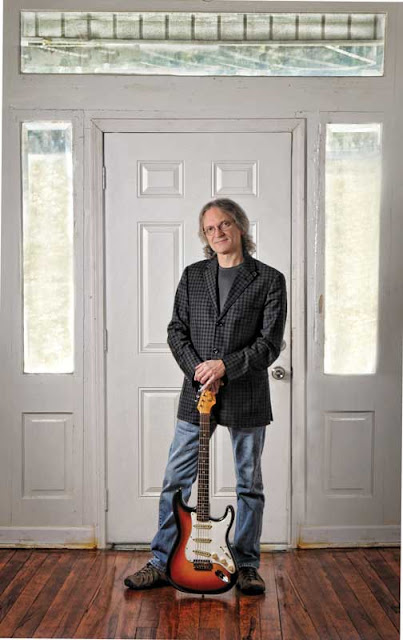 |
| Sonny Landreth |
Then there were the artists with whom I was familiar; I’d heard of them, but didn’t own any of their recordings. I knew the music of Sisters Morales but I didn’t own any solo recordings by Lisa Morales. The same was true of Bill Frisell. From reading album credits I knew at one time Sonny Landreth played in John Hiatt’s band, The Goners, but even though I’d heard of Sonny, I didn’t own any of his music.
Finally, there were the artists who were new to me. They weren’t new to the scene, but I wasn’t familiar with their work. Toronzo Cannon, Johnny Nicholas and Jamie Lin Wilson are three such artists.
I enjoy turning my friends on to good music. I’ve told them about some of the terrific musicians and songwriters I’ve discovered. They listen politely until their eyes glaze over. My friends are creatures of habit, but aren’t we all?
I subscribe to the Duke Ellington school of thought: “There are two kinds of music. Good music and the other kind.” If I like it, I’ll listen to music regardless of labels. At the same time, it’s difficult to write about this without resorting to categorization. The artists profiled in A Perfectly Good Guitar represent a variety of genres.
I’ve never understood the guy who claims to just like only country music or classical or jazz. In my opinion, that’s like saying you only like the color blue.
This blog features ten artists from A Perfectly Good Guitar. These ten artists represent personal discovery. Their genres don’t matter. They’re just labels, but do they mean anything?
“All By Myself” – Dave Alvin
Dave Alvin spent his youth sneaking into blues bars with his older brother, Phil, to see and learn from masters like Big Joe Turner, T-Bone Walker, and Lightning Hopkins. In 1979 he and Phil formed the seminal roots rock band, the Blasters. They released four influential albums before Dave left to join the band, X, and later embark on a solo career that produced several critically acclaimed albums, including the Grammy Award-winning Public Domain. He and Phil reunited in 2014 to record Common Ground, their tribute album to Big Bill Broonzy, and later a blues album, Lost Time.
Dave recalls how he purchased a 1934 National resonator guitar. He used that guitar on the Broonzy song “All By Myself,” the first track on Common Ground.
By Paul Youngquist
He came from Saturn. He traveled the space ways. He created better music for a better world. Sun Ra’s reputation as an inspired musician is finally on the rise. But Sun Ra was much more than that: a poet, a prophet, and an activist whose medium was sound. “I
would hate to pass through a planet,” he once said, “and not leave it a better place.” He did just that, if the stunning body of recording he left behind is any measure: hundreds of LPs, miles of tape, and countless fan recordings of concerts, radio broadcasts, and interviews.
He created a cosmos of sound. A Pure Solar World: Sun Ra and the Birth of Afrofuturism explores its origins and aims: the places that inspire Sun Ra’s music and the spaces it opens for new ways of living, especially for African Americans. As a black man from Birmingham, Alabama, who moved to mid-century Chicago (to speak in earthly terms), Sun Ra experienced first-hand the indignities of racism and segregation. He created a better future by composing music and writing poetry. His glorious achievement makes him the granddaddy of Afrofuturism, the contemporary cultural movement dedicated to imagining new black worlds.
The only way into the future for Sun Ra is through space age sound. This playlist follows the long arc of his career with the “Arkestra,” the name he gave his shape-shifting band. From inner city to outer space: Sun Ra’s exploratory music moves from the familiar to the otherworldly and back again. It was always a collaborative voyage involving diverse musicians, audiences, and supporters, financial and spiritual. You’re part of it now. Listen with an open heart. Imagine a better tomorrow.
“Super Blonde”: The Sun Ra Arkestra’s very first release, a 45 rpm single appearing in 1956. “Super Blonde” reappears a year later on El Saturn’s first LP, Super-Sonic Jazz. The tune announces the arrival on planet Earth of a formidable ensemble, skilled in the herky-jerky rhythms of bebop. The harmonized head, coming after Sun Ra’s mid-tempo piano intro, is pure Charlie Parker. Boppers beware!
“Spaceship Lullaby”: Rehearsal tapes contain wonders, and Sun Ra always had tapes running. In the mid-fifties he coached several doo-wop ensembles. The singers here called their group The Nu Sounds, and Sun Ra arranged their harmonies. In this case he wrote their lyrics too, including phrases appearing again in later Arkestra recordings: “zoom, zoom, up in the air,” and “interplanetary melodies.” The Nu Sounds’s space trip takes a dangerous turn when the singers must fly through the sun to arrive at Saturn.
Brick-and-mortar independent bookstores are on the rise in the Amazon age largely because they foster a sense of community through engaging staff, author events, and book clubs. That's why it is so exciting to have Don't Suck, Don't Die: Giving Up Vic Chesnutt by Kristin Hersh on the October IndieBound Next List, a roundup of the best new books based on reviews by independent booksellers.
It's our third book to appear on an IndieBound Next List. First, the hardback edition of Jan Reid’s Let the People In: The Life and Times of Ann Richards (now a $11.36 paperback on our website), made a splash in 2012. Then in 2013, Two Prospectors: The Letters of Sam Shepard and Johnny Dark landed on the list alongside Amy Tan, Wally Lamb, and Ann Patchett. Now Kristin Hersh's haunting ode to a lost friend Don't Suck, Don't Die has deeply moved booksellers across the country. Hersh's new book joins Lauren Groff's Fates and Furies, Mary Karr's The Art of Memoir, and other highly anticipated titles. Browse the full list here.
To celebrate, we've gathered all the bookseller reviews together and thrown in our book trailer, Spotify playlist, and fan zine!
Bookseller Quotes
"Add Kristin Hersh’s Don't Suck, Don't Die to the list of music memoirs that have little to do with music. A book about her friendship with the talented and tragic Vic Chesnutt, the style, tone, and quality of the very personal writing allow this work to sit nicely next to Patti Smith’s Just Kids and Kim Gordon’s Girl in a Band, but the unique tenderness between Vic and Kristin ensure that the book also stands alone. The book sometimes feels like a punch in the gut, and sometimes like a good hug, but it is always affecting. For anyone who is a fan of Hersh, or anyone who loved Chesnutt, or anyone who has a best friend."
"Vic Chesnutt wrote songs so brilliant and powerful that they drew the attention of the likes of Michael Stipe, Patti Smith, and Jeff Mangum. His direct, bold, and uncompromising honesty through artistry are the very things that made him a legend that never broke into mainstream popularity. In Don't Suck, Don't Die, his longtime touring partner and friend Kristen Hersh draws a portrait of an artist so clear and unflinching that only a true friend could. Hersh takes time to focus on the importance of both the tragedies and joys of Chesnutt's life and art, never dismissing the important fleeting moments in exchange for rock star spectacle. No other book about a musician reaches the level of intimacy, respect, and love for a friend as Hersh's does."
"Hersh's memoir of her time spent touring with the musician Vic Chesnutt is an intimate portrayal of a unique friendship faced with the harsh realities of life on the road. Hersh addresses Chesnutt directly in this book giving the reader the feeling of eavesdropping on a conversation that is still ongoing even though Chesnutt killed himself years ago. The method clearly reveals the open wound of Hersh's heart and the beauty of her love for Chesnutt."
“This is an amazing memoir. It paints a beautiful portrait of Vic Chesnutt, his unique friendship with the author and the sorrowful broken darkness they each deal with. The language is warm, intimate and poetic. It's so gorgeous it actually hurts to read. I have not been so moved by a piece of art, any art in years. Even with the inevitable tragic ending, Hersh keeps you hanging on with her delicate and sublime prose. You know you are circling a vortex but the water is so perfect you don't care. This story aches, laughs, stuns, pulls you into it like a siren song. You will put it down with insights that seem natural but impossible. You'll want more of both Chesnutt and Hersh and all the more brokenhearted at the enormity of the loss.”
— Bosco Farr, Bookstore manager, BookPeople (Austin, TX)
"Like a playlist that charts the musical arc of a certain time and place," writes arts critic Jeanne Claire van Ryzin of the Austin American-Statesman, “Homegrown provides the visual soundtrack to an Austin as it emerged into a progressive music town." Well, now
there's an actual soundtrack to accompany the book and exhibition: Homegrown: Austin Music Posters 1967 to 1982. Our Spotify playlist is like a crash course in the diverse music scenes of Austin's heyday.
When most people think about the Austin music scene of the late 1960s and 70s, they think of psychedelia, classic rock, or progressive country, but the music posters covered in Homegrown include lesser-known Austin scenes like blues and punk. So, yes, of course Willie Nelson, Stevie Ray Vaughan, and Doug Sahm are on our playlist, but so are acts like Big Joe Williams, Walter Page, and Clifton Chenier.
Follow this playlist on Spotify for an indispensable aural history of Austin from the late 1960s up until the 1980s. As we all know, the music of the eighties is an entirely different story.
"Starvation"—Golden Dawn: This cult-status psychedelia band from Austin still plays Psych Fest.
"Rainy Sunday Morning"—The Thingies: An obscure band that was only in Austin for about five months before their manager got in trouble with the IRS.
"Mojo Hand"—Lightnin' Hopkins: This Texas bluesman recorded more albums than any other blues musician. Read all about his life and music in the award-winning book Mojo Hand by Timothy J. O'Brien and David Ensminger.
"You're Gonna Miss Me"—The 13th Floor Elevators: Often credited as one of the first psychedelic bands in the history of rock n' roll (according to Wikipedia), this seminal band featured guitarist and vocalist Roky Erickson and influenced acts from ZZ Top to Primal Scream. This song leads the High Fidelity soundtrack. They're playing their 50th year reunion on May 10! Visit austinpsychfest.com for more information.
"Homesick Armadillo Blues"—Shiva's Headband: House band of the Vulcan Gas Company of the 1960s and part founders of the Armadillo World Headquarters, these guys still perform in Austin and were crucial to Austin's legendary music scene.
"CIA Man"—The Fugs: The Fugs protested war through satirical songs and staged "The Real Woodstock Festival" to fight against the commercialization of Woodstock '94. This song is featured in the Coen brother's movie Burn After Reading.
"Sunday Morning"—The Velvet Underground: Andy Warhol challenged Lou Reed to write a song about paranoia and this is Reed's answer to Warhol's challenge. It's a pretty fitting subject for the heady Sixties.
"Rock and Roll, Hoochie Koo"—Johnny Winter: This earlier version was later recorded by Rick Derringer and hit #23 on the Billboard Hot 100. Johnny Winter originally thought this song was a little corny, but Winter's version is certainly bluesier than Derringer's.
 A West Texas Driving Mix
By John T. Davis
Route 66…That hard-assed Amarillo Highway…the Loop…the Strip…the Lost Highway…the Eight’r From Decatur…
Roads aren’t just strips of asphalt in West Texas—they are lifelines and metaphors and escape routes and the promise that lies somewhere over yonder. In a dusty and isolated landscape where so much seems fixed in place, there’s healing power in movement. Terry Allen, the artist and musician who has spent his creative life in a love/hate relationship with the Texas Panhandle and the South Plains once said, “No one with access to a car and a good radio station should ever need a psychiatrist.”
The Flatlanders, whose personal and musical journey I’ve chronicled in a new book, The Flatlanders: Now It’s Now Again, grew up driving the highways, ranch roads and farm-to-market byways that surrounded their home in Lubbock, Texas. The “road,” both literal and metaphorical, has always informed the music made by the group and by its three central figures—Joe Ely, Butch Hancock and Jimmie Dale Gilmore. Even today, says Joe Ely, when he needs musical inspiration, he’ll take off and drive the grid of tiny back roads that thread their way across the empty plains. It’s a big, blank reservoir of silence, begging to be filled with music.
In that spirit, I’ve put together a mix tape for driving across the plains of West Texas—it’s been a long day behind the wheel, the sun is finally beginning to set and the lights of a small town glimmer on a distant, ruler-straight horizon. The road, as Tom Russell likes to sing, it gives, and the road it takes away.
Access the playlist on your Spotify account here.
“Amarillo Highway”—Terry Allen (from Lubbock On Everything): “I’m a high straight in Plainview/Side bet in Idalou/And a fresh deck in New Deal,” sings Allen against a honky-tonk piano and steel guitar. “Some call me high hand/And some call me low hand/But I’m holding what I am—the wheel.” US Hwy. 87, about which Allen was singing, has been supplanted by modern Interstate 27, but the groove is still the same.
“Rave On”—Buddy Holly (from the album The Buddy Holly Collection): Because, duh. Lubbock native Holly set the template for the modern rock band, scored huge hits, inspired the Beatles (and the Flatlanders) and became the first rock ‘n’ roll martyr, all by age 22. Roll down the window, crank it up and let ‘er rip.
Slate's culture blog 'Brow Beat' excerpted David Cantwell's Merle Haggard: The Running Kind recently, which was great, and then to round it out they followed up with the author's top picks from the Haggard song book. The post features a handy Spotify playlist to accompany his Merle gem rundown, listing the best songs to listen to if you're new to Merle Haggard or just want to appreciate a "Bakersfield dozen" of his best songs.
David Cantwell also sat down with Chris Gondek of Heron & Crane to record a podcast interview about Haggard's roots in working class Oklahoma and California, wowing his musical influences like Lefty Frizzell, and the Bakersfield sound: more dancin' and drinkin' than sittin' and listenin'.
Listen to the podcast here: http://utpress.utexas.edu/index.php/podcasts/cantwell-merle-haggard
Now get in the mood to read Merle Haggard: The Running Kind!


