The South by Southwest music conference and festival (SXSW, as it is now known) kicks off this week here in Austin, TX. The reach of SXSW has gone global and quite a bit corporate, which means well-established music acts like the Avett Brothers, Weezer, and the Wu-Tang Clan can steal thunder from the hundreds of relative unknowns who travel from all over the world to Austin hoping for exposure and whatever one calls a "record deal" these days. It's these hardworking musicians and local artists who prop up the massive event SXSW has become. They slug it out to make a name for themselves, hauling their equipment all over town to get as much stage time as possible. That's the game.
From Willie Nelson to the bassist in a Sixth Street house band, most guitarists have strong feelings about their primary tool, and some are downright passionate about their axes. When photographer and writer Chuck Holley set out to document guitar players talking about their most prized instruments, he thought he was fairly well-versed in professional guitarists. The playlist he has put together for this blog is all about the lesser-known artists he discovered over the eight years he photographed guitarists with their favorite instruments and listened to their stories. A Perfectly Good Guitar is a beautifully illustrated book presenting these stories in revelatory photographs, featuring Rosanne Cash, Guy Clark, JD Souther, Jorma Kaukonen, Kelly Willis, and more.
Enjoy the selection on Spotify here.
Discovering Good Music
By Chuck Holley
In the Fall of 2007 I began a project interviewing and photographing guitarists. I asked each professional to single out one guitar in their arsenal and explain why it was important to them. The result of that eight-year effort is the book, A Perfectly Good Guitar.
I’m an unabashed music fan and, when I began this project, I considered myself well-versed about music from different genres. I knew about the good stuff—or at least I thought I did.
It didn’t take long to realize how many great working musicians are out there I didn’t know about. Reality set in; it became painfully obvious how much I had to learn.
As the project picked up steam, artists who came to my attention fell into one of three categories: There were the seasoned professionals whose recordings I already owned. Players like Dave Alvin, Joanna Connor, Alejandro Escovedo and Bill Kirchen come to mind. Sure, I had a Blasters record with Alvin and his brother on it and I had one of his early solo albums. My collection of Joanna Connor music consisted of one early release on Blind Pig Records and I owned three or four Escovedo albums. In the case of Kirchen, I knew all about his days with Commander Cody and His Lost Planet Airmen. As for his solo work, I didn’t have a clue. In the ensuing years, my interests turned to other artists.
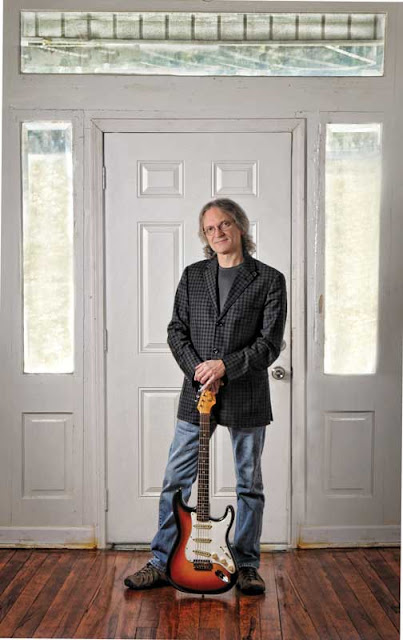 |
| Sonny Landreth |
Then there were the artists with whom I was familiar; I’d heard of them, but didn’t own any of their recordings. I knew the music of Sisters Morales but I didn’t own any solo recordings by Lisa Morales. The same was true of Bill Frisell. From reading album credits I knew at one time Sonny Landreth played in John Hiatt’s band, The Goners, but even though I’d heard of Sonny, I didn’t own any of his music.
Finally, there were the artists who were new to me. They weren’t new to the scene, but I wasn’t familiar with their work. Toronzo Cannon, Johnny Nicholas and Jamie Lin Wilson are three such artists.
I enjoy turning my friends on to good music. I’ve told them about some of the terrific musicians and songwriters I’ve discovered. They listen politely until their eyes glaze over. My friends are creatures of habit, but aren’t we all?
I subscribe to the Duke Ellington school of thought: “There are two kinds of music. Good music and the other kind.” If I like it, I’ll listen to music regardless of labels. At the same time, it’s difficult to write about this without resorting to categorization. The artists profiled in A Perfectly Good Guitar represent a variety of genres.
I’ve never understood the guy who claims to just like only country music or classical or jazz. In my opinion, that’s like saying you only like the color blue.
This blog features ten artists from A Perfectly Good Guitar. These ten artists represent personal discovery. Their genres don’t matter. They’re just labels, but do they mean anything?
“All By Myself” – Dave Alvin
Dave Alvin spent his youth sneaking into blues bars with his older brother, Phil, to see and learn from masters like Big Joe Turner, T-Bone Walker, and Lightning Hopkins. In 1979 he and Phil formed the seminal roots rock band, the Blasters. They released four influential albums before Dave left to join the band, X, and later embark on a solo career that produced several critically acclaimed albums, including the Grammy Award-winning Public Domain. He and Phil reunited in 2014 to record Common Ground, their tribute album to Big Bill Broonzy, and later a blues album, Lost Time.
Dave recalls how he purchased a 1934 National resonator guitar. He used that guitar on the Broonzy song “All By Myself,” the first track on Common Ground.
 A West Texas Driving Mix
By John T. Davis
Route 66…That hard-assed Amarillo Highway…the Loop…the Strip…the Lost Highway…the Eight’r From Decatur…
Roads aren’t just strips of asphalt in West Texas—they are lifelines and metaphors and escape routes and the promise that lies somewhere over yonder. In a dusty and isolated landscape where so much seems fixed in place, there’s healing power in movement. Terry Allen, the artist and musician who has spent his creative life in a love/hate relationship with the Texas Panhandle and the South Plains once said, “No one with access to a car and a good radio station should ever need a psychiatrist.”
The Flatlanders, whose personal and musical journey I’ve chronicled in a new book, The Flatlanders: Now It’s Now Again, grew up driving the highways, ranch roads and farm-to-market byways that surrounded their home in Lubbock, Texas. The “road,” both literal and metaphorical, has always informed the music made by the group and by its three central figures—Joe Ely, Butch Hancock and Jimmie Dale Gilmore. Even today, says Joe Ely, when he needs musical inspiration, he’ll take off and drive the grid of tiny back roads that thread their way across the empty plains. It’s a big, blank reservoir of silence, begging to be filled with music.
In that spirit, I’ve put together a mix tape for driving across the plains of West Texas—it’s been a long day behind the wheel, the sun is finally beginning to set and the lights of a small town glimmer on a distant, ruler-straight horizon. The road, as Tom Russell likes to sing, it gives, and the road it takes away.
Access the playlist on your Spotify account here.
“Amarillo Highway”—Terry Allen (from Lubbock On Everything): “I’m a high straight in Plainview/Side bet in Idalou/And a fresh deck in New Deal,” sings Allen against a honky-tonk piano and steel guitar. “Some call me high hand/And some call me low hand/But I’m holding what I am—the wheel.” US Hwy. 87, about which Allen was singing, has been supplanted by modern Interstate 27, but the groove is still the same.
“Rave On”—Buddy Holly (from the album The Buddy Holly Collection): Because, duh. Lubbock native Holly set the template for the modern rock band, scored huge hits, inspired the Beatles (and the Flatlanders) and became the first rock ‘n’ roll martyr, all by age 22. Roll down the window, crank it up and let ‘er rip.


